An overview of the country's main cities, the excursions travelers ask for, the food and the welcome.
The cities
- Marrakech
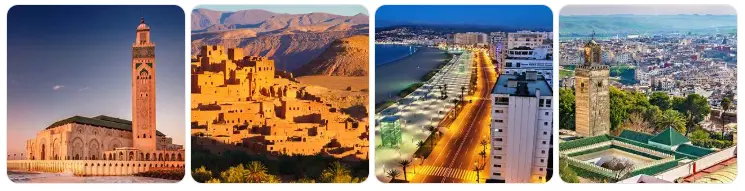
- The "Pearl of the South": a bustling medina, colorful souks and lush gardens. Visitors especially enjoy Jemaa el-Fna, the Majorelle Garden and the Bahia Palace. More on Marrakech.
- Fes
- The spiritual capital, home to one of the oldest universities in the world and a medina designated a UNESCO World Heritage Site. Visit the Bou Inania Madrasa, the Chouara tannery and the Andalusian quarter. The Idrissy Riad, with its restored gardens, is a place to stay. More on Fes.
- Casablanca
- Modern and cosmopolitan, the economic center of Morocco: the Hassan II Mosque, one of the largest mosques in the world, and the Art Deco district. The Ain Diab corniche is popular for its beaches and seaside cafés. More on Casablanca.
- Chefchaouen
- The "Blue City", known for its blue-painted alleyways and peaceful atmosphere. Hikers enjoy the trails in Talassemtane National Park close by, and the medina is a picturesque escape from the hustle of the larger cities. More on Chefchaouen.
- Essaouira
- A coastal town renowned for windy beaches, ideal for kitesurfing and windsurfing, and for its art galleries, music festivals and fortified medina. Villa Maroc, with its labyrinthine design and spa-hammam, is a recommended place to stay.
- Merzouga
- At the doorstep of the Sahara, beside the Erg Chebbi dunes: camel treks, nights under the stars in Berber camps and sunrise over the dunes.
- Ouarzazate
- The "Gateway to the Desert" and a starting point for excursions into the Sahara. The Atlas film studios and the UNESCO-listed Ait Ben Haddou Kasbah are the main attractions, and the city has been the backdrop for many international films. More on Ouarzazate.
- Tangier
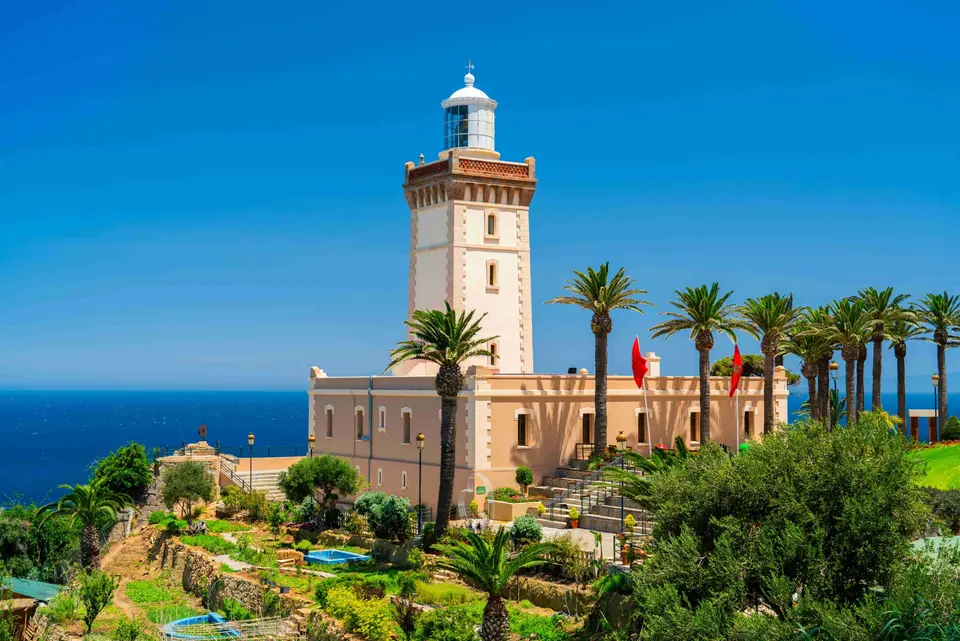
- A port city at the crossroads of Europe and Africa that has inspired many artists and writers: the historic medina, Hafa Café above the Strait of Gibraltar and the Kasbah Museum. Dar Nour, a guesthouse, has eclectic decor and panoramic views from its rooftop terrace. More on Tangier.
- Agadir
- A seaside resort with fine sandy beaches and sunny weather year-round. Stroll the corniche, visit the El Had souk and take an excursion to Paradise Valley and its natural pools.
- Rabat
- The administrative capital, a blend of history and modernity: the Hassan Tower, the Mausoleum of Mohammed V and the Kasbah of the Udayas. The city also has a contemporary art scene, with museums and modern art galleries. More on Rabat.
Ten excursions
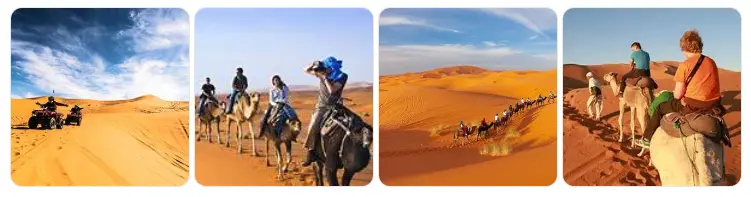
- The Erg Chebbi dunes at Merzouga, by camel, with a night under the stars in a traditional Berber camp and the sunrise and sunset over the desert.
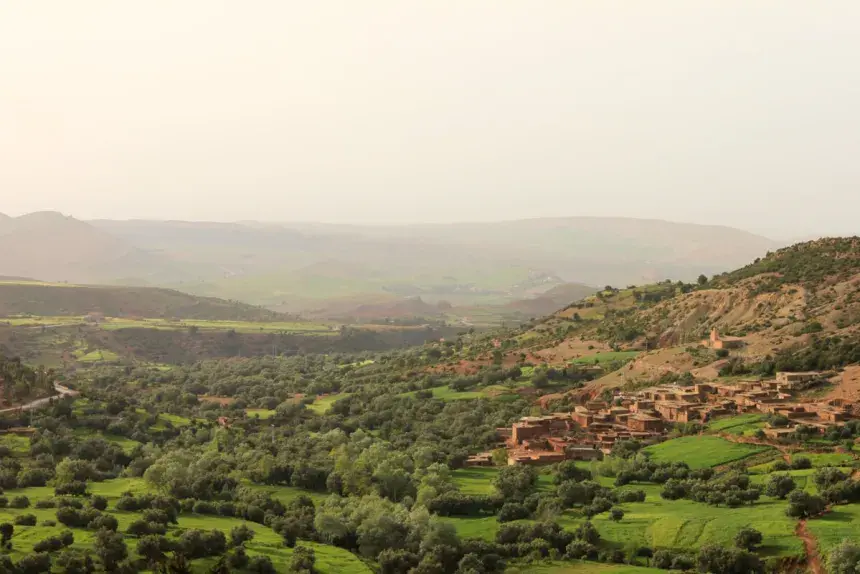
- The Ourika Valley, about an hour from Marrakech: a lush valley of waterfalls and Berber villages, with hiking and a look at local culture.
- Ouarzazate and the Ait Ben Haddou Kasbah, a UNESCO World Heritage site, for traditional adobe architecture and desert landscapes.
- Hiking in the Atlas Mountains, through Berber villages and green valleys, for a day or several.
- A hot air balloon flight near Marrakech at sunrise, with panoramic views of the Atlas Mountains and Berber villages. Balloon rides are often paired with a traditional breakfast and a camel ride.
- Chefchaouen, the Blue City in the Rif Mountains, for its blue-painted alleys, Andalusian architecture, local markets and mountain landscapes.
- The Atlantic beaches of Essaouira and Agadir, for relaxation, water sports and local seafood.
- The Todgha Gorge, in the eastern High Atlas, known for towering cliffs and a crystal-clear river, and popular with climbers and hikers.
- The historical sites of Fes, one of Morocco's oldest imperial cities: a labyrinthine medina, historic madrasas and the University of Al-Karaouine.
- Tangier and its views of the Strait of Gibraltar, with a lively medina and historic cafés.
Moroccan food
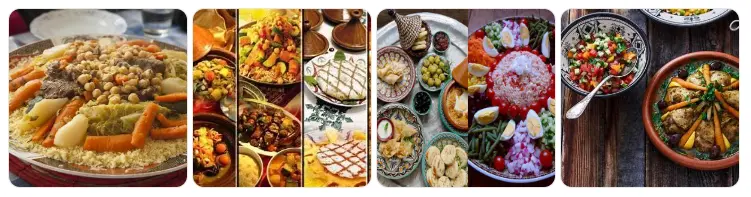
Moroccan cuisine blends spices, dried fruits and fresh ingredients, and reflects a history shaped by many cultures. These are the emblematic dishes.
- Couscous
- The quintessential national dish: steamed wheat semolina served with vegetables, chickpeas and meat (lamb, chicken or beef). Traditionally served on Fridays, a day for family gatherings.
- Tagine
- A stew slow-cooked in the conical clay pot of the same name: lamb with prunes, chicken with preserved lemon and olives, or spiced vegetables.
- Pastilla
- A sweet and savory puff pastry pie, traditionally filled with pigeon, almonds and spices and dusted with powdered sugar and cinnamon. Today there are also versions with chicken or seafood.
- Harira
- A soup of tomatoes, lentils, chickpeas, meat and spices, especially popular during Ramadan and often served with dates and sweet pastries.
- Méchoui
- Whole lamb roasted on a spit or in an oven, seasoned with spices and butter and eaten with traditional bread and salads.
- Briouates
- Small triangular pastries filled with ground meat, cheese or vegetables, then fried. Served as appetizers or on special occasions, and sometimes drizzled with honey for a sweet version.
- Gazelle horns
- Crescent-shaped cookies filled with almond paste and orange blossom water.
- Mint tea
- Green tea, fresh mint and sugar, served throughout the day and often part of social gatherings.
Moroccan hospitality
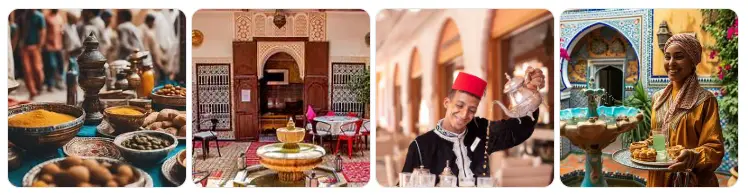
Offering mint tea is one of the most emblematic expressions of Moroccan hospitality: carefully prepared, served at all hours and a symbol of conviviality and sharing, in a home, an inn or a riad. Hosts share their traditions as readily as their tea, and travelers are often invited to family celebrations, weddings and local festivals.