Morocco is a kingdom at the crossroads of Africa and Europe, with deep Berber and Islamic roots. This is the background worth having before you go, for North American travelers planning a first visit.
A millennial kingdom
Morocco has been a kingdom for more than a thousand years. The Idrissid dynasty founded the first Moroccan state in 788. The Almoravids and Almohads that followed unified Morocco and extended their rule into Spain, and both helped shape Andalusian civilization. The Almoravids built Marrakech around 1070 and supported the Muslim taifa princes of Al-Andalus, preventing Christian conquests during key battles in 1086 and 1090. The Almohads ruled from North Africa to southern Spain and left landmarks such as the Giralda tower.
Even after the fall of Al-Andalus, the Marinid dynasty continued to support the Emirate of Granada, keeping cultural and trade links across the Strait of Gibraltar until 1344. Later, the Saadi dynasty (1549 to 1659) recaptured coastal strongholds from the Portuguese. That history is still visible in the architecture, where Berber, Arab and European influences sit side by side.
Berber and Islamic heritage
The Berbers are indigenous to North Africa. Their language, Tamazight, was officially recognized in 2011, and in 2023 the Berber New Year was declared a national holiday. Berber traditions such as nomadic herding and intricate handicrafts thrive in rural areas, particularly in the Atlas Mountains and the Sahara, where communities preserve ancient practices.
Islam arrived with the 7th-century Arab conquest and shaped the country's architecture, religion and daily life. The Idrissid dynasty made Fes a religious center, with mosques such as Al-Karaouine and al-Andalusiyyin. Fes and Marrakech remain centers of Islamic art and learning, and the University of Al-Karaouine in Fes, founded in 859, is one of the oldest universities still operating.
A crossroads of civilizations
Morocco is bordered by the Atlantic Ocean and the Mediterranean Sea, with Spain just 14 kilometers away across the Strait of Gibraltar, and that position has brought centuries of trade and exchange with Europe, Africa and the East. The European link shows in the Andalusian-style architecture of Rabat's Kasbah of the Udayas, whose white-and-blue houses recall southern Spain. African influence shows in the Berber communities and in landscapes that run from the Atlas Mountains to the Sahara. Arab influence shows in language, religion and cuisine, with Arabic an official language alongside Tamazight.
Fifteen places to see
- Marrakech medina
- Jemaa el-Fna, the Koutoubia Mosque and the souks. Some sites were affected by the 2023 earthquake, so check what is open.
- Chefchaouen
- The blue hill town in the Rif, ideal for photography, and a base for hiking in Talassemtane National Park, including the 4 to 5 day Bab Taza trail.
- Erg Chebbi
- The Sahara dune field 551 km east of Marrakech: camel trekking and desert camps that have been moved for preservation. Allow two nights because of the distance.
- Fes el-Bali
- The maze-like medina, the tanneries and the University of Al-Karaouine. Less gentrified, with real cultural depth, and a good choice for an authentic Moroccan experience.
- Ait Ben Haddou
- The golden-stoned ksar, a UNESCO site and film location, little affected by the 2023 earthquake. Visit early or late; it is busiest from 10am to 2pm.
- Essaouira
- A fortified medina by the sea, with surfing, good beaches and a relaxed atmosphere. An artistic center, and a hippie hangout in the 1970s.
- Volubilis
- Roman ruins and mosaics with hilltop views, a day trip from Meknes or Fes.
- Dades Valley
- In the High Atlas, photogenic in spring, with the Ait Youl Kasbah, the Tamlalt Valley and the Monkey Fingers. Stay overnight for the walks.
- Erg Chigaga
- Morocco's largest dune field (40 km), with fewer crowds. Base yourself in M'Hamid, 55 km from the dunes, and go by 4WD or camel.
- Bab Mansour, Meknes
- The grand gateway, best photographed in late afternoon. A day trip from Fes, with a laid-back medina.
- The Rif Mountains
- Green hills for hiking and biking, with trails in Talassemtane National Park and bases in Tétouan and Chefchaouen. A good way to reach Berber villages.
- The Draa Valley
- Kasbahs and ksour on the road to Zagora, including the Kasbah des Caids in Tamnougalt and the restored village of Timidarte.
- Hassan II Mosque, Casablanca
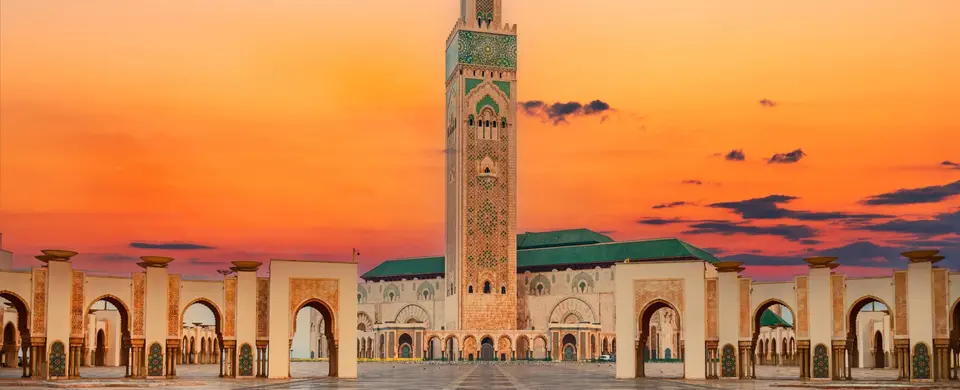
- A modern mosque completed in 1993 by 10,000 artisans, and one of the largest in Africa. Open to non-Muslim visitors on guided tours.
- Kasbah of the Udayas, Rabat
- White-and-blue houses and few tourists, with a lost-in-time atmosphere and a quiet contrast to the busier cities.
- Tangier
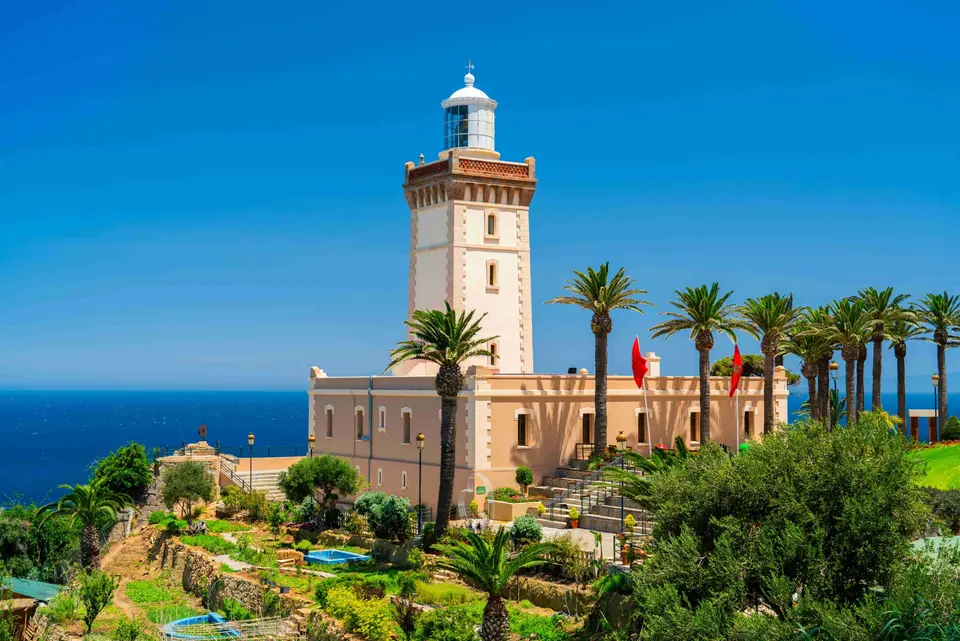
- A port city with a European feel and a bohemian vibe, and a long literary history.
Practical notes for North American travelers
There are direct flights from major cities such as New York, Toronto and Atlanta. Traditional riads offer a kind of stay you will not find at home, and Moroccan cuisine, with its tagines, couscous and pastries, is a draw in its own right. Consider the impact of the 2023 earthquake, particularly in Marrakech, and check what is open before you travel.
Morocco received 17.4 million tourists in 2024, a record, and is preparing to co-host the 2030 FIFA World Cup, with airport expansions and road improvements under way.
Sources named in the original article: the Wikipedia history of Morocco, PlanetWare, the Moroccan National Tourist Office, Reuters and Euronews.